
Your choice of shutter speed will have a controlling effect on how movement will be captured in the finished photograph. Too slow a shutter speed will result in blurring of the subject while too fast a shutter speed can sometimes cause a scene to look unnaturally static. In choosing a shutter speed you will have to consider several factors.
- camera movement.
- subject movement.
- how much movement you want to show.
- aperture setting.
Camera shake which we covered in the previous section.
Subject movement.
For most people the most important aspect of choosing a shutter speed is getting one fast enough to freeze movement. Unfortunately the world is full of things that all move at different speeds and no one bothered to make a list of what shutter speed would be needed to freeze each and every one of them. With this in mind I have put together a little table containing some common 'things that move' and a suitable shutter speed to stop them. You can use these values as a basis for working out shutter speeds for other situations you may encounter This is a rough guide only and there is no substitute for practice.
| Still Life | Shutter speed will not affect a subject which is completely static |
| Landscape | Landscapes are fairly static but wind will move clouds, grass, leaves etc 1/30th of a second if you want it still. Less if you want a bit of life in it. |
| Street scene. | 1/60th - 1/125th of a second. |
| Your holiday photos. | 1/60th - 1/125th of a second. |
| Person walking. | 1/125th - 1/250th of a second. |
| Person running. | 1/500th - 1/1000th of a second. |
| American football, soccer, rugby etc. | 1/250th - 1/1000th of a second and lots of practice. |
| Car, approx. 30 mph. | 1/1000th -1/2000th of a second. |
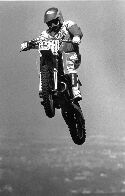
| Motocross. | 1/500th of a second and over and lots of practice. |
| F1 / Indy car. | 1/1000th of a second and over plus lots of practice. |
It is probably worth mentioning that subject movement is also relative to the distance from the camera. That means something moving at a fixed speed will appear to move faster the closer it is to the camera / larger in the viewfinder. On top of that, movement is more apparent travelling across your field of view than it is moving towards you.
Now that you have an idea of how to make things stop moving we will have a wee look at making the things you stopped look as if they are still moving.